
Loading…
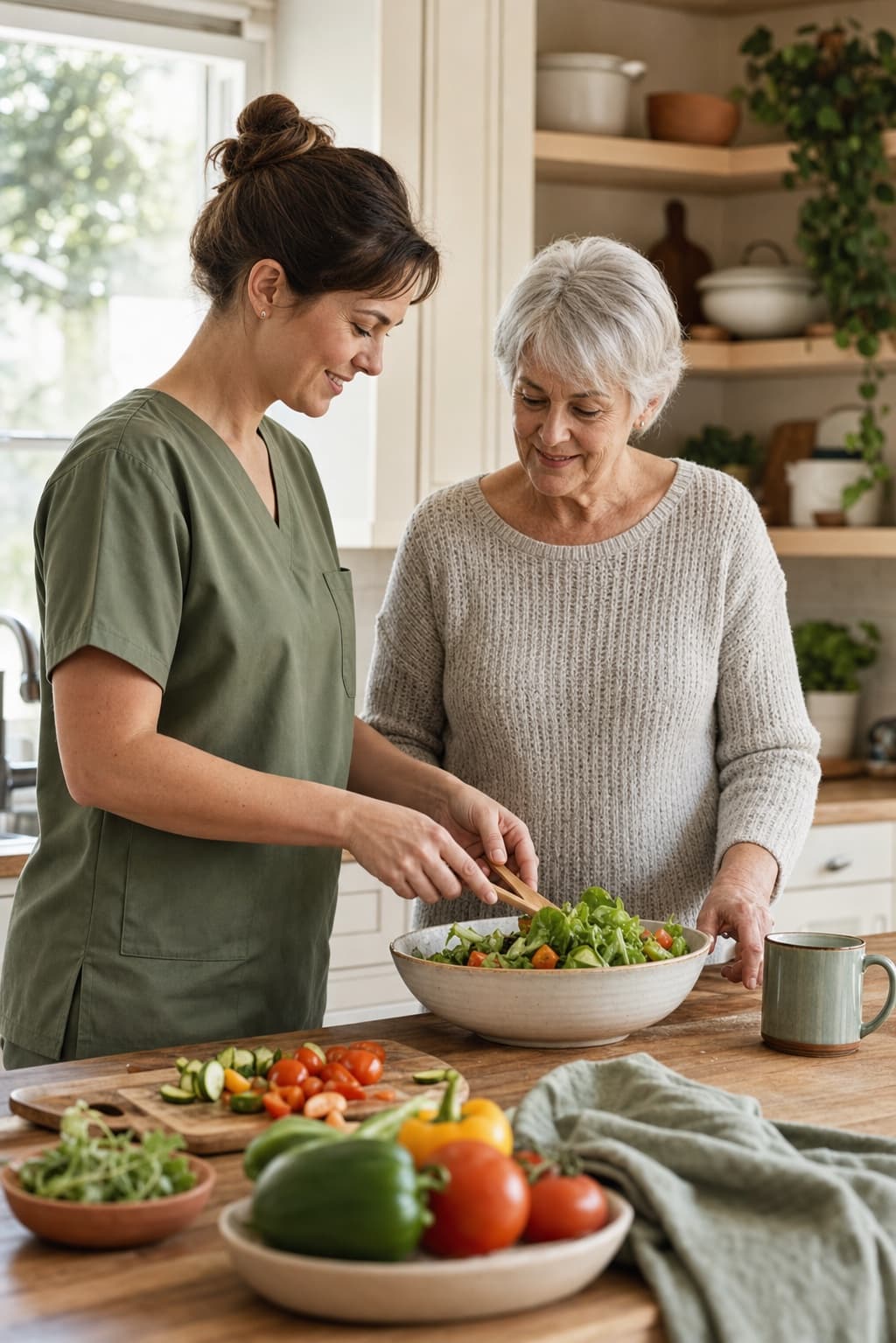
Caregivers help plan, prepare, serve, and clean up meals around appetite, culture, budget, diet limits, and the foods a person will actually eat.
Home-cooked meals prepared with care, tailored to your loved one's needs.
Review food preferences, diet notes, and what is already in the kitchen Prepare a simple meal or prep food for later
Meal routines often slip gradually. A person may stop cooking, skip meals, forget to drink water, or rely on snacks because preparing food has become tiring or unsafe.
Warmheart meal support is practical. Caregivers can help with grocery lists, simple meal planning, cooking, serving, hydration reminders, and kitchen cleanup.
The best meal plan is one the person will actually follow. We pay attention to appetite, culture, familiar foods, texture preferences, and known dietary instructions from family or clinicians.
Review food preferences, diet notes, and what is already in the kitchen
Prepare a simple meal or prep food for later
Encourage hydration and safe eating routines
Clean the kitchen surfaces, dishes, and used items
Flag low groceries, appetite changes, or food safety concerns
Read how Warmheart supports families in nearby Maryland communities, then call when you are ready to talk through the home situation.
Yes, depending on the care plan and time scheduled. Meals are usually simple, familiar, and shaped around the client's preferences and needs.
Caregivers can help make grocery lists and support errands when that is part of the scheduled plan.
Caregivers can follow clear dietary instructions provided by family or clinicians, but medical nutrition plans should be directed by a qualified clinician.